




CHAMBER MUSIC FESTIVAL 2026
2nd Concert
2nd Concert: Emotion & Lyricism Across Centuries
Wed 26.8
CHAMBER MUSIC FESTIVAL 2026
Although the term “Romanticism” is often associated in our minds with a specific historical period—the nineteenth century—and a particular style of musical writing, the desire of composers to express emotions with intensity and vividness has always been, both before and after the nineteenth century, one of the principal aims of Music, if not its foremost one.
The program of this concert therefore offers a magnificent panorama of different forms of lyricism: the classical, graceful and unexaggerated lyricism of Mendelssohn; the passionate and spiritually ecstatic lyricism of Liszt; and the playful, piquant and extroverted lyricism of the great twentieth-century Czech modernist Bohuslav Martinů. Common to all three works are the emotional power, sincerity and radiance of their musical vision.
Franz Liszt (1811–1886) - From Années de pèlerinage, Première année: Suisse, S.160
Bohuslav Martinů (1890–1959) - Piano Trio No. 2 in D minor, H.327 (1950)
Felix Mendelssohn (1809–1847) - String Quintet No. 2 in B-flat major, Op. 87 (1845)
Book your tickets
Safely book your tickets online
Wounds & Lamentations [80 years since the end of World War II – 50 years since the death of Dmitri Shostakovich] arrow_forward1st Concert: Origins & Transcendence arrow_forward
2nd Concert: Emotion & Lyricism Across Centuries arrow_forward
3rd Concert: Intimacy & Universality arrow_forward
4th Concert: Contrasts & Convergences arrow_forward
5th Concert: Tension & Balance arrow_forward
6th Concert: Tradition & Memory arrow_forward
Special 4-Day Pass arrow_forward
Book your tickets
- Online at ticketservices.grarrow_forward
Concert
Works
CHAMBER MUSIC FESTIVAL 2026

Franz Liszt (1811–1886)
From Années de pèlerinage, Première année: Suisse, S.160
The epistolary novel Obermann (1804) by the French Romantic writer Senancour recounts the solitary journey of a wanderer through the Swiss mountains, thus following a particularly beloved literary motif of the 19th century, that of the “solitary wanderer,” who seeks the deeper identity of his existence in solitude; and every natural phenomenon or landscape along his path emerges as a reflection of his own emotional states. Franz Liszt drew inspiration from this important literary work for his piano piece Vallée d’Obermann, which, in an initial version, was written during the period when he lived in Switzerland (1835–1836) together with his lover, Countess Marie d’Agoult. Both this work and other piano works from that period were published several years later (1855), following extensive revision by the composer, together forming the first volume (Switzerland) of the piano cycle Années de pèlerinage. They are among the finest creations of the composer’s maturity, written when he had consciously abandoned the life of a virtuoso pianist and had settled permanently in Weimar.
Vallée d’Obermann is undoubtedly not only the crowning work of Switzerland but also one of Liszt’s most popular and profound piano works, uniquely expressing the feelings of loneliness, nostalgia, but also feverish intensity experienced by Senancour’s protagonist, which, by extension, also dominate the composer’s soul. Many years after the work was composed, by the 1870s, Eduard Lassen (1830–1904), Liszt’s successor as Kapellmeister at the Weimar Court, arranged Vallée d’Obermann for piano trio.

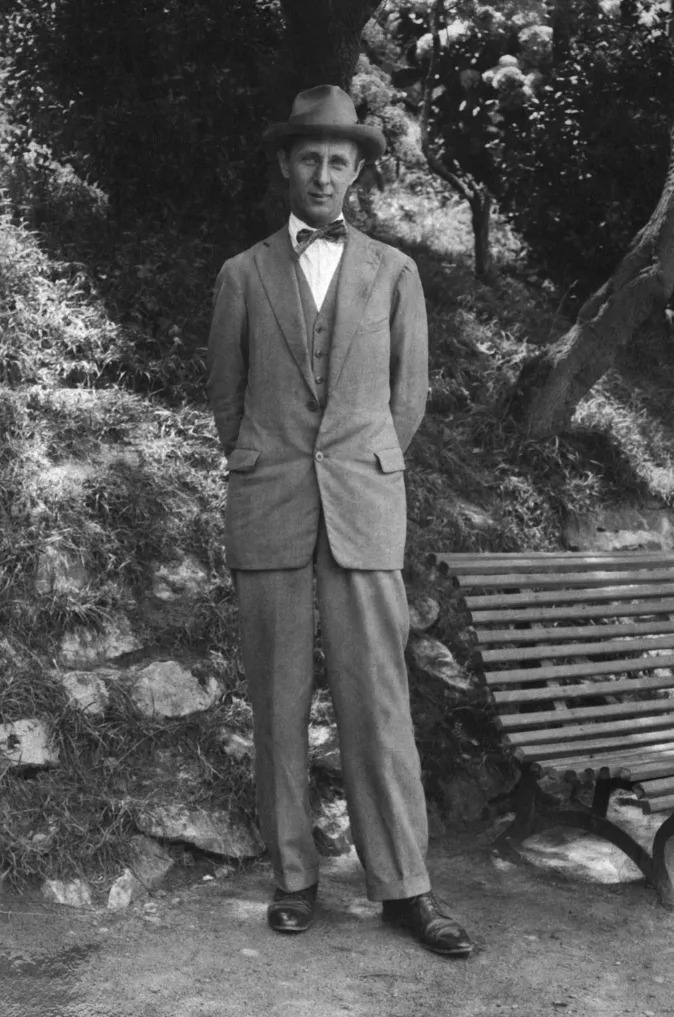
Bohuslav Martinů (1890–1959)
Piano Trio No. 2 in D minor, H.327 (1950)
1. Allegro moderato
2. Andante
3. Allegro
The life of the Czech composer was unconventional and turbulent in every respect. He was born in the small town of Polička and spent his childhood living at the top of the tower of a local church, since his father, in addition to being a shoemaker, was also a fire watcher. Over the years he developed into a capable violinist, although in 1910 he was expelled from the Prague Conservatory for “incorrigible negligence” – musical composition (and literature) clearly interested him more. He frequently travelled from country to country, taking on various jobs (as a performer or as a music teacher), while in 1941 he was forced to flee from France to the United States because of the Second World War and his close ties with the French Resistance.
He composed ceaselessly and across a broad spectrum of instrumental and vocal music, developing a personal idiom that could hardly be placed within any of the dominant aesthetic movements of the 20th century. His music, full of vitality, vigour and spontaneous emotion, intelligently combines modernist elements and an advanced harmonic language with traditional forms (sonata, concerto, symphony, etc.), which for many of Martinů’s fellow composers and contemporaries were by then considered outdated.
His Second Trio for violin, cello and piano was written in America within a short period of time in February 1950, a full twenty years after the First Trio, which had been written in 1930. The work was commissioned by the renowned Massachusetts Institute of Technology (MIT) to be performed (as indeed it was, on 19 May 1950) at the inauguration of the Hayden Library, named after a distinguished American banker and benefactor. Despite the generally bright mood of the Trio (which, after all, characterises the majority of Martinů’s works), the string writing in the first movement is rather weighty, recalling in a certain sense Schumann’s chamber music, while the intricate treatment of the material points to Beethoven as a model. In the lyrical slow movement, piano and strings assume distinct roles, while all three instruments embark on a shared and frenzied course in the brilliant finale, whose almost uninterrupted intensity pulsates between anxiety and euphoria.



Felix Mendelssohn (1809–1847)
String Quintet No. 2 in B-flat major, Op. 87 (1845)
1. Allegro vivace
2. Andante scherzando
3. Adagio e lento
4. Allegro molto vivace
At only seventeen years of age, in 1826, the German Romantic composer Felix Mendelssohn composed his First String Quintet, following Mozart’s model in terms of instrumentation, that is, writing it for two violins, two violas and one cello. His next engagement with this particular chamber-music genre was to come many years later, in 1845, two years before his premature death, and its result was the Quintet in B-flat major, which was published posthumously in 1851.
Having founded the Leipzig Conservatory in 1843 and teaching composition there (alongside other renowned professors, such as Ignaz Moscheles and Robert Schumann), Mendelssohn felt, in the autumn of 1844, the need to set aside for a while his teaching duties and his even more demanding concert commitments in Leipzig (as well as in Berlin and Britain); he therefore settled with his family in Frankfurt, and there, in the summer of 1845, composed his Second String Quintet, for the same instruments for which he had written the First. Mendelssohn himself, however, was not satisfied with the work, especially with its finale – and this was the reason he refrained from publishing it during his lifetime. Nevertheless, time has shown that the composer was more modest and severe with himself than he needed to be – and the affection and esteem with which audiences around the world continue to regard the Second Quintet to this day are the most compelling proof.
On hearing the work, one cannot help but think of Mendelssohn’s extraordinary Octet, a product of his youth and a cornerstone of the chamber-music repertoire, since the two compositions display many elements in common, despite the many years separating them. Spontaneous melodiousness, transparent writing faithful to Classical models, almost uninterrupted rhythmic energy, lyricism that never descends into the commonplace or the superficially passionate, as well as vigorous dialogues between the instruments, are elements encountered in both works – if not in the majority of Mendelssohn’s mature works.
Yet the movement of the Second Quintet that truly stands out is the third, in whose emotionally charged gestures one senses that the composer is opening up new expressive paths, more highly charged and without inner restraint in their passionate utterances, paths that were destined to permeate the development of Romanticism in the art of music in the years that followed the composer’s death.
