



CHAMBER MUSIC FESTIVAL 2026
4th Concert
4th Concert: Contrasts & Convergences
Sun 30.8
CHAMBER MUSIC FESTIVAL 2026
Three works, three composers, three centuries, three instrumental combinations and three entirely different sonic worlds.
At the dawn of the nineteenth century, standing at the threshold between Classicism and Romanticism, Weber entrusts some of his most beautiful melodies to the clarinet, lovingly supported by the strings. Approximately one hundred and twenty years later, the Hungarian modernist Béla Bartók, drawing inspiration alternately from the folk traditions of his homeland and the Balkans and from American jazz, invites the clarinet and violin into fiery dialogues, with the piano serving as mediator between them.
Then, at the dawn of the twenty-first century, the celebrated Finnish composer, conductor and pianist Olli Mustonen, feeling the weight of centuries of musical history upon his shoulders, looks toward the future while freely assimilating influences from the past, inevitably filtered through his own unique artistic voice.
Twelve outstanding performers unite in their shared intention of transforming the experience of these three remarkable works into an unforgettable musical journey for the audience.
Béla Bartók (1881–1945) - Contrasts for Clarinet, Violin and Piano, Sz.111 (1938)
Olli Mustonen (b. 1967) - Nonet No. 2 (2000)
Carl Maria von Weber (1786–1826) - Clarinet Quintet in B-flat major, Op. 34 (1815)
Book your tickets
Safely book your tickets online
Wounds & Lamentations [80 years since the end of World War II – 50 years since the death of Dmitri Shostakovich] arrow_forward1st Concert: Origins & Transcendence arrow_forward
2nd Concert: Emotion & Lyricism Across Centuries arrow_forward
4th Concert: Contrasts & Convergences arrow_forward
5th Concert: Tension & Balance arrow_forward
6th Concert: Tradition & Memory arrow_forward
Special 4-Day Pass arrow_forward
Book your tickets
- Online at ticketservices.grarrow_forward
Concert
Works
CHAMBER MUSIC FESTIVAL 2026
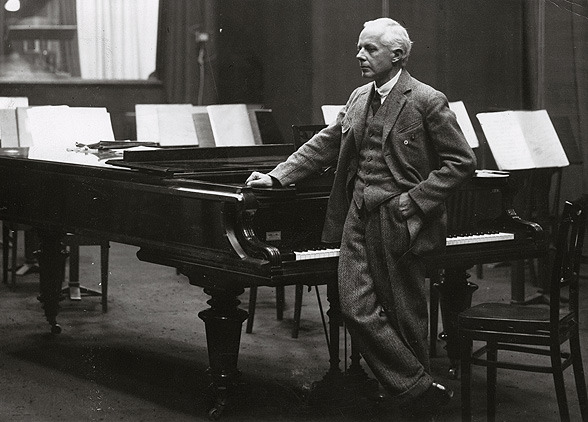
Béla Bartók (1881–1945)
Contrasts for Clarinet, Violin and Piano, Sz.111 (1938)
1. Verbunkos (Recruiting Dance)
2. Pihenő (Relaxation)
3. Sebes (Fast Dance)
The name of the Hungarian composer Béla Bartók is associated in the minds of musicians and music lovers with some of the highest achievements of musical modernism during the first half of the 20th century. Widely recognised as one of the founders of the discipline of ethnomusicology, Bartók studied and documented the traditional music of his homeland as well as that of many countries of Eastern Europe, leaving a research legacy of immense value to subsequent generations of musicologists. As a composer, influenced by traditional idioms while also creatively assimilating the forms and aesthetic refinement of Western music (particularly the music of the Renaissance and Baroque), he developed a personal and entirely original language, cerebral yet at the same time full of vitality, groundbreaking yet deeply rooted in the distant, and sometimes even the remotest, musical past.
Contrasts is Bartók’s only trio and was written in 1938 on commission from his friend and collaborator, the Hungarian violinist Joseph Szigeti, as well as the famous American jazz clarinettist Benny Goodman, also known by the nickname “the King of Swing.” The term “contrasts” aptly conveys the stylistic character of the entire work. It brings out in the most direct way the contrast between the very different timbres of the three instruments and is distinguished by strong and frequent contrasts in tempo, colour and emotional mood. And, of course, we should not forget the subtler and somewhat underlying contrast that pervades the work, between the musical styles that shaped its genesis, namely the classical, the traditional and that of jazz. Noteworthy passages in the work are the two virtuosic cadenzas for clarinet and violin in the first and third movements respectively. In addition, at the beginning of the finale Bartók employs the technique of scordatura in the violin, which consists of tuning some of the violin’s strings differently from the usual tuning. After this unusual opening, the violinist is required to change instruments, switching to a normally tuned violin. Similarly, the clarinettist is called upon to use two instruments in succession, a clarinet in B-flat and one in A. The calm and gentle second movement is a characteristic example of Bartók’s so-called “night music,” in which the music represents the various sounds of nature at night.



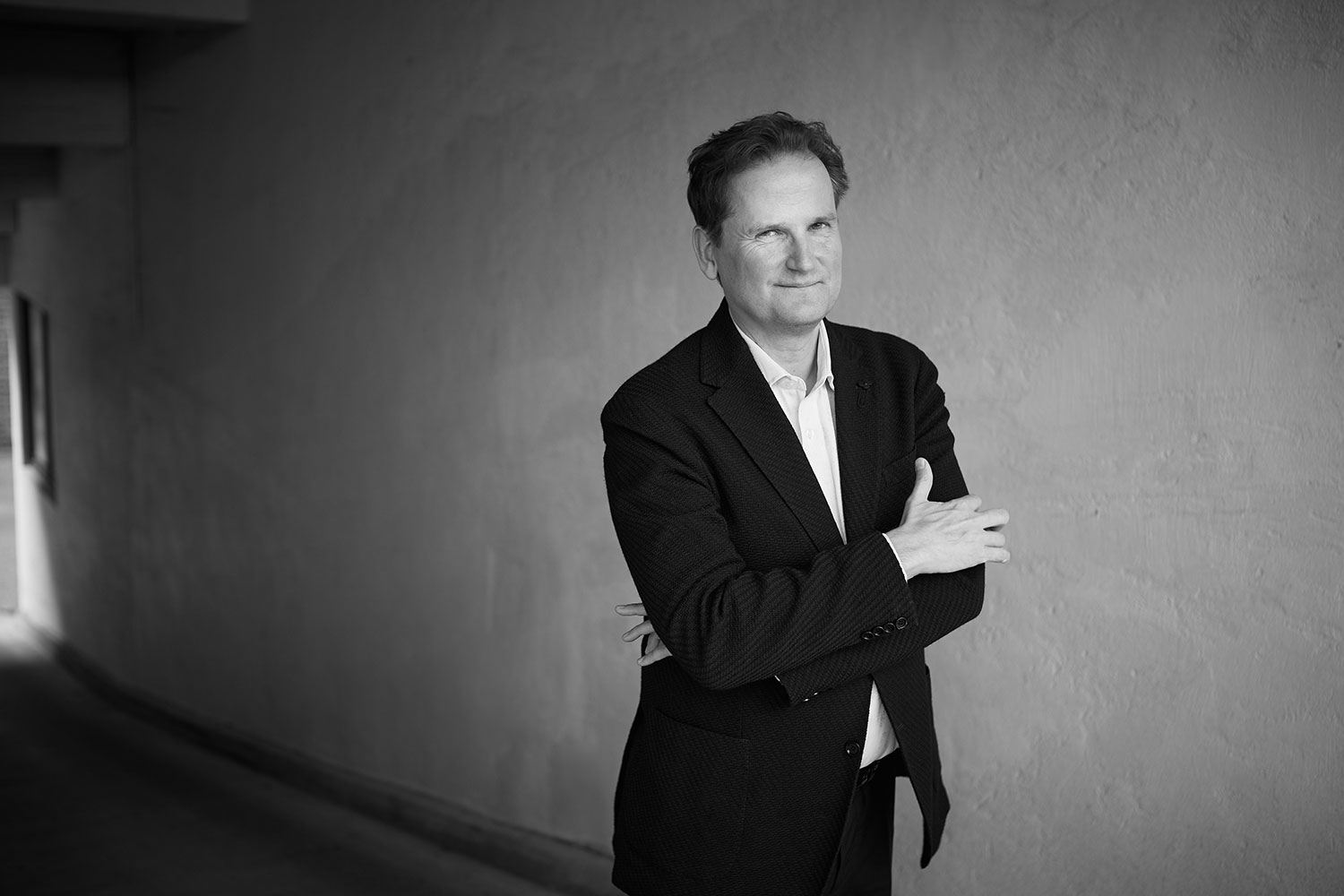
Olli Mustonen (b. 1967)
Nonet No. 2 (2000)
1. Inquiteto
2. Allegro impetuoso
3. Adagio
4. Vivacissimo
The Finnish Olli Mustonen is one of the very few musicians of our time who combines three capacities – pianist, conductor and composer – succeeding in excelling equally in all three. This multifaceted activity makes him, in a sense, a “successor” to great figures in the art of music who likewise distinguished themselves in all three capacities, such as Sergei Rachmaninoff or Ferruccio Busoni. His Second Nonet for Strings was written in 2000 and dedicated to his parents. He himself describes the content of the work as follows:
“The first movement opens with sharp dissonances and static rhythms, which nevertheless create a Balkan-style pulse. This short and concise movement is rather anxious. The second movement is romantically exuberant and passionate. To its main themes is added a hymn-like theme, which evokes galloping rhythms in the style of Beethoven. In the development of the thematic material, the music is influenced by Sibelius’s style. The movement eventually comes to a quiet close, although its persistent rhythmic pattern never fully subsides. The slow movement is smiling in character, with writing that is more sparse and spacious than that of the preceding movement. The main theme is brief; as it is repeated, it acquires a character of despair, while a slight virtuosic dimension is also present. Despite momentary intrusions of the minor mode, the music as a whole retains a positive radiance. The finale brims with light – sound effects reminiscent of bells evoke a Russian celebration. Passages of a virtuosic character appear one after another but collide with rhythmic ‘blows.’ Towards the end, however, the music erupts into an instrumental ecstasy.”



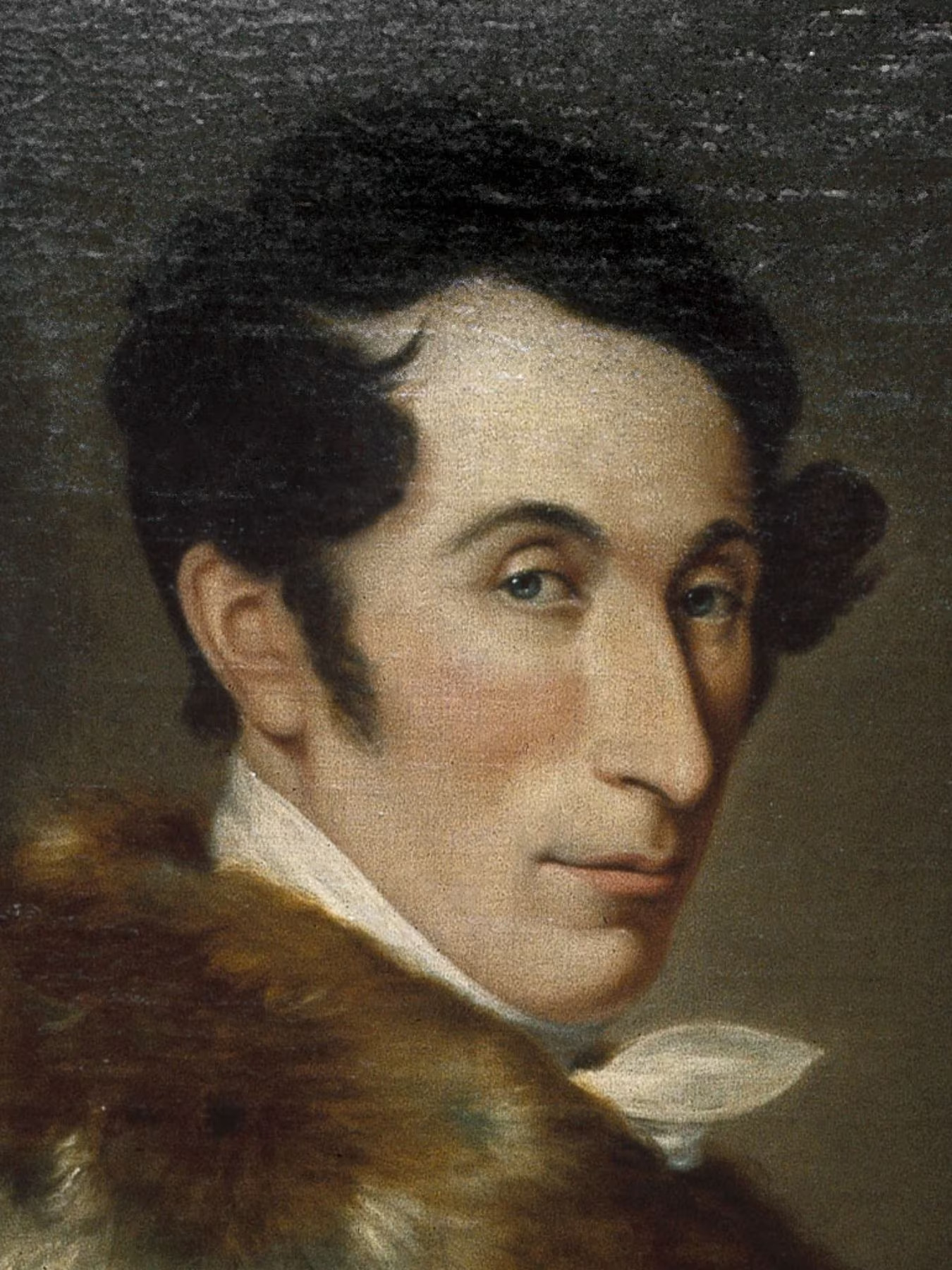
Carl Maria von Weber (1786–1826)
Clarinet Quintet in B-flat major, Op. 34 (1815)
1. Allegro
2. Fantasia: Adagio
3. Menuetto: Capriccio
4. Rondo: Allegro giocoso
There are many instances in the history of music in which the virtuosic and expressive abilities of particular performers stimulated the inspiration of composers and led to the creation of important works; this is precisely the case with one of Europe’s first clarinet virtuosos, the German Heinrich Baermann (1784–1847). The composer Carl Maria von Weber, two years his junior and one of the principal representatives of early German Romanticism, had the opportunity to meet and hear Baermann for the first time in March 1811, during a journey to Munich. The extent to which he was impressed by the clarinettist’s soft and effortless sound is demonstrated in practice by the fact that, within that same year, he had already written for him a Concertino and two major Concertos, while also beginning work on the magnificent Clarinet Quintet, Op. 34 – with the idea that the work, requiring a string quartet rather than an entire orchestra alongside the clarinettist, could be performed more easily and more frequently by Baermann.
Although the first written evidence of Weber beginning work on the Quintet dates from 24 September 1811, the first three movements of the work were completed in April 1813, while the concluding Rondo was ready on 25 August 1815. Shortly before the composer and performer met, the latter had acquired a new instrument that offered possibilities unprecedented by the standards of the time – and it is clear that Weber intended his music to exploit these possibilities to the fullest and to display them in the most vivid manner. This is precisely demonstrated by the way in which the (obviously) leading clarinet part is dominated by chromatic scales (sometimes resonant and sometimes softly played), high notes of particular expressive weight at a soft dynamic (pianissimo), as well as “smooth” connections (legato) between high and low notes. Most importantly, however, nothing in the music of the Quintet betrays an aim at superficial display; rather, everything serves music rich in depth and spirituality, worthy of a composer who, only a few years later, would become established as the father of German Romantic opera.