




CHAMBER MUSIC FESTIVAL 2026
3rd Concert
3rd Concert: Intimacy & Universality
Fri 28.8
CHAMBER MUSIC FESTIVAL 2026
The Chamber Music Festival Chania is delighted to welcome the Athens State Orchestra Wind Quintet, an ensemble with a long and distinguished artistic presence in Greek musical life. The ensemble joins forces with internationally acclaimed Russian pianist Alim Beisembayev in one of the most beloved works ever written for winds and piano, Francis Poulenc’s Sextet.
If Poulenc’s Sextet evokes the atmosphere of an intimate conversation among close friends, Schubert’s String Quintet, which completes the evening’s program, opens a window onto the most spiritual and universal realms accessible to the human mind. One of the supreme masterpieces of the chamber music repertoire, this Quintet remains an endlessly fascinating journey to the very limits of human feeling, into a realm where the perception of time gives way to the immediate and disarming experience of transcendence.
Francis Poulenc (1899–1963) - Sextet for Wind Quintet and Piano (1932–1939)
Franz Schubert (1797–1828) - String Quintet C major, D956 (1828)
Book your tickets
Safely book your tickets online
Wounds & Lamentations [80 years since the end of World War II – 50 years since the death of Dmitri Shostakovich] arrow_forward1st Concert: Origins & Transcendence arrow_forward
2nd Concert: Emotion & Lyricism Across Centuries arrow_forward
4th Concert: Contrasts & Convergences arrow_forward
5th Concert: Tension & Balance arrow_forward
6th Concert: Tradition & Memory arrow_forward
Special 4-Day Pass arrow_forward
Book your tickets
- Online at ticketservices.grarrow_forward
Concert
Works
CHAMBER MUSIC FESTIVAL 2026
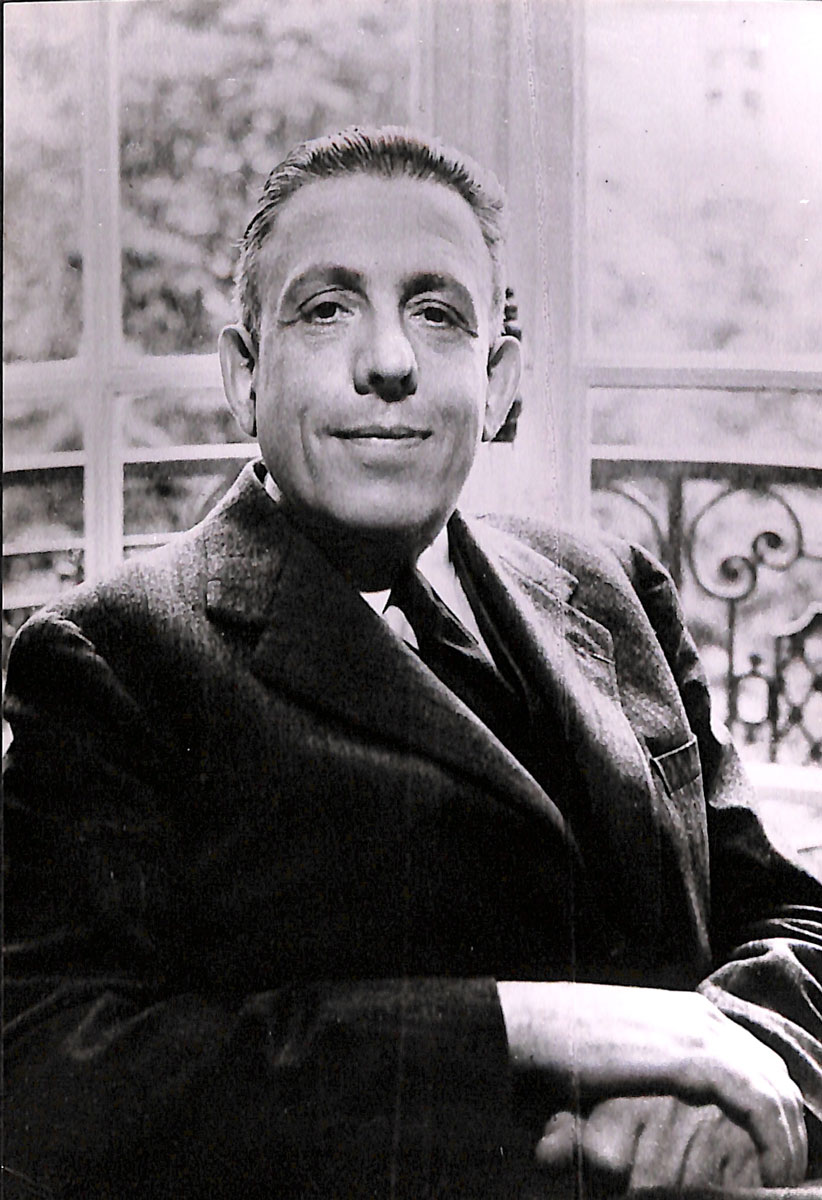
Francis Poulenc (1899–1963)
Sextet for Wind Quintet and Piano (1932–1939)
1. Allegro vivace
2. Divertissement: Andantino
3. Finale: Prestissimo
Essentially unaffected by the various manifestations of musical modernism in the first half of the 20th century (such as the French Impressionism of Debussy and Ravel), while at the same time keeping his distance from the Romantic language of the 19th century, Francis Poulenc represents one of the most distinctive compositional voices of his time. A prominent member of the so-called “Group of Six” (Les Six), six composers sharing common aesthetic values who dominated French musical life during the first half of the 20th century, Poulenc composed throughout his life music that was light, consciously aiming for charm and melodic immediacy but never superficial, rich in meaning and depth but never pompous, witty but never intricately cerebral; working within a clearly tonal framework but always with an adventurous spirit, he succeeded in conveying subtle emotional nuances with enviable naturalness.
His Sextet for flute, oboe, clarinet, horn, bassoon and piano was written in 1931–32, at a time when the composer’s popularity was at its height (his famous Concerto for Two Pianos and Orchestra also dates from this period). The premiere of the Sextet took place in Paris in 1933, with the composer himself at the piano, but the work underwent extensive revision in 1939, when it assumed the definitive form in which it is known today. With a clear emphasis on melody, the Sextet is distinguished by its grotesque humour and intense rhythmic energy, which is unexpectedly interrupted by moments of “childlike” innocence, enigmatic suspension or melancholy reverie. A lover of the sound of wind instruments, the composer handles each instrument with a profound knowledge of its particular expressive characteristics, while dialogues of “Neoclassical” clarity are woven among the six instruments, embellished with genuine French grace and finesse.



Franz Schubert (1797–1828)
String Quintet C major, D956 (1828)
1. Allegro ma non troppo
2. Adagio
3. Scherzo. Presto – Trio. Andante sostenuto
4. Allegretto
The Quintet was written between August and October 1828 and is Schubert’s final chamber-music work. Neither the composer’s manuscript nor his musical sketches have survived, and therefore the exact time of composition cannot be determined with absolute precision. Nevertheless, in early October 1828, Schubert submitted the newly completed Quintet, together with his last three Piano Sonatas and several songs, to his publisher in Leipzig, asking him to undertake their publication; the publisher showed interest in the songs but rejected the Quintet, probably because he considered its length excessive and therefore commercially unviable. Ultimately, the Quintet remained in obscurity until November 1850, when the historic Austrian Hellmesberger String Quartet presented it publicly in concert for the first time. And another three years had to pass before its first publication could take place (1853).
Schubert’s choice to add an additional cello to the standard string-quartet formation (rather than an additional viola, as in Mozart’s corresponding quintets) follows the model of Luigi Boccherini’s quintets. Boccherini, one of the greatest cello virtuosos of his time, had indeed employed two cellos in his quintets, assigning the second a relatively simple role, supporting the harmonic foundation of the music, while allowing the first to move in a higher register and in a more virtuosic and prominent manner (this part was evidently intended to showcase his own exceptional abilities). By contrast, Schubert conceives all five performers in his Quintet as equal partners in the unfolding of the musical action. He also demonstrates in practice his intention to exploit the warm sound of the two cellos when they play the same melodic line (as occurs at certain points in both the first and fourth movements), while on some other occasions (in the second and third movements), the cello supports the violin’s melodic line an octave lower.
The String Quintet is unquestionably one of the greatest and most beautiful works not only by Schubert but in chamber music as a whole. Perhaps more than any other work by the Austrian composer, it reveals every aspect of his musical temperament: spontaneous lyricism and expressive melodiousness, a “Viennese” finesse and elegance, outbursts of intense Romantic passion, and a sense of tragic conflict and (inner) struggle. Throughout the work, moments of intense dissonance and harmonic “adventure” are juxtaposed with passages of Olympian serenity and tender melodies, thus portraying with enviable clarity the very contrasts of human life.
This depth of content, of course, is not the product of chance but the result of conscious intent: suffering from the symptoms of syphilis (from 1822 onwards), Schubert had consciously decided, already around 1824, to seek happiness and “liberation” from the outwardly miserable reality of his life through his Art; an Art that sought less and less to please his social surroundings or prospective publishers and increasingly turned towards becoming a sincere expression of its creator’s soul, a legacy of Beauty for all time.